Protection layer
Designed as a transparent cover layer for solar-cell radiation protection, UV filtering, optical shielding, and surface durability.
Primary Product Route
Ultra-thin cerium-doped cover glass for spacecraft solar-cell protection stacks, designed for high optical transmission, radiation shielding, UV filtering, glass stability, and low-Earth-orbit durability.
Sample Views
Representative ultra-thin cover glass samples are shown below for customer evaluation, including handling views, edge visibility, and coated-glass appearance under laboratory lighting.
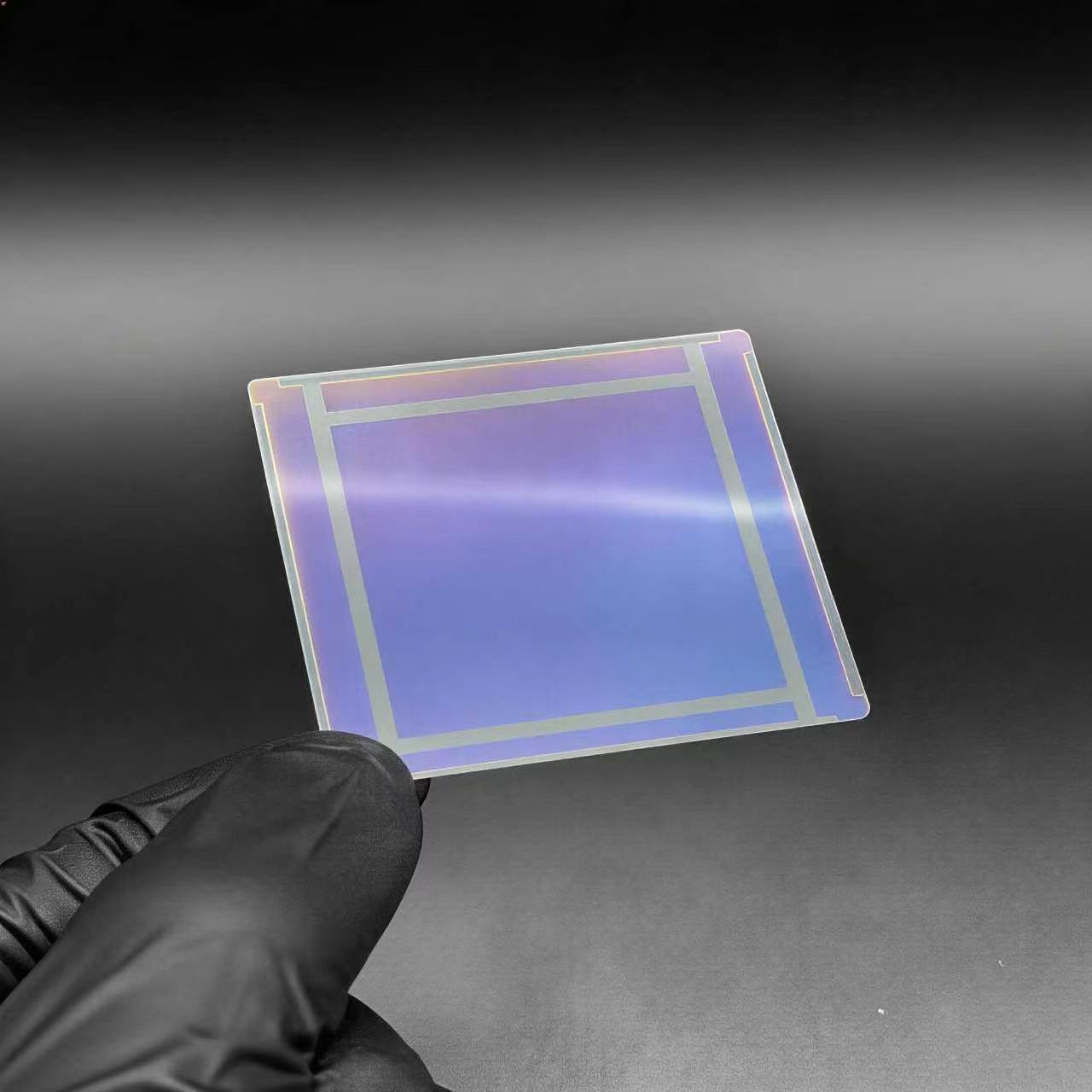
Angled sample view
Representative ultra-thin cover glass showing coated optical appearance and edge definition.
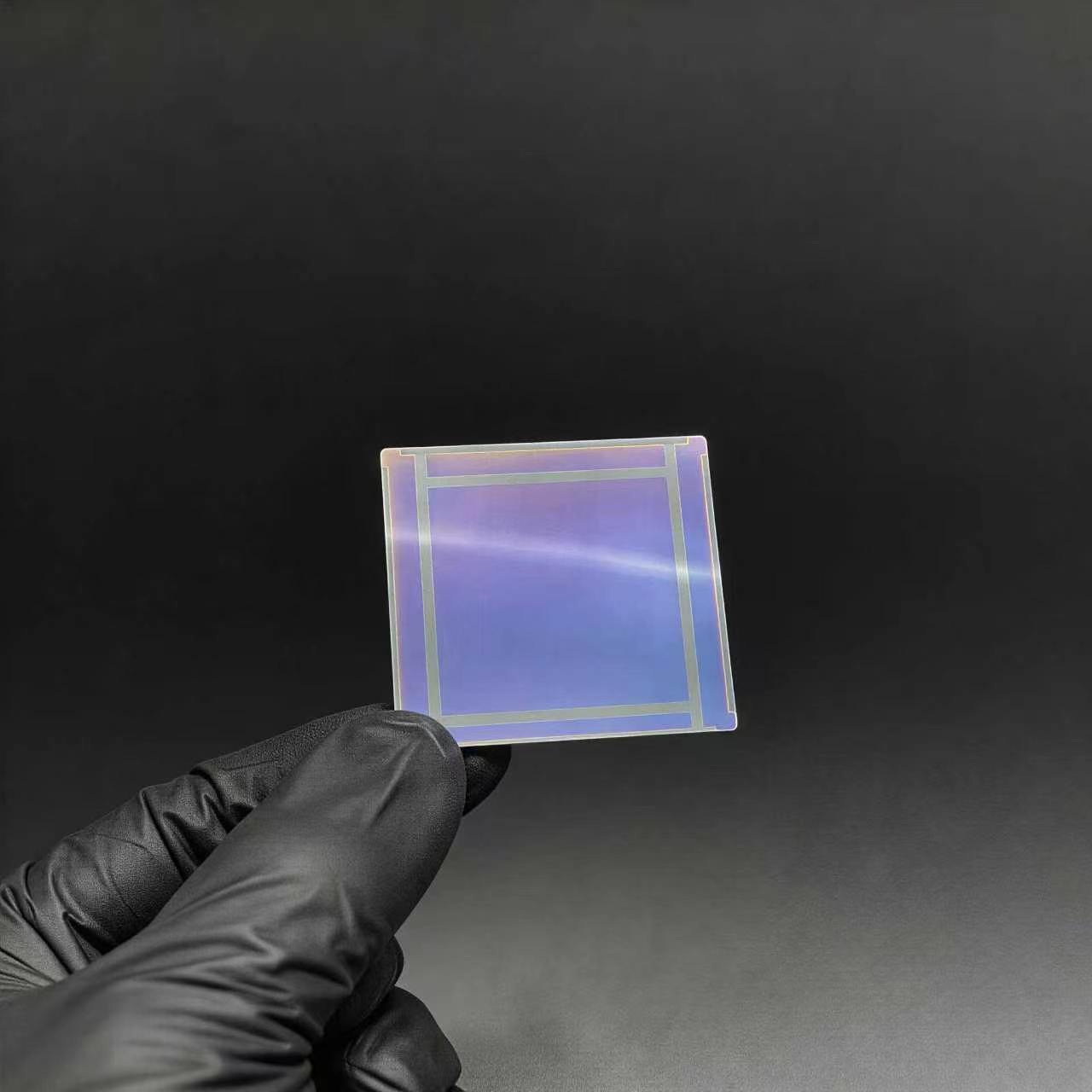
Handling view
Gloved handling view for scale and visual inspection of the thin glass coupon.
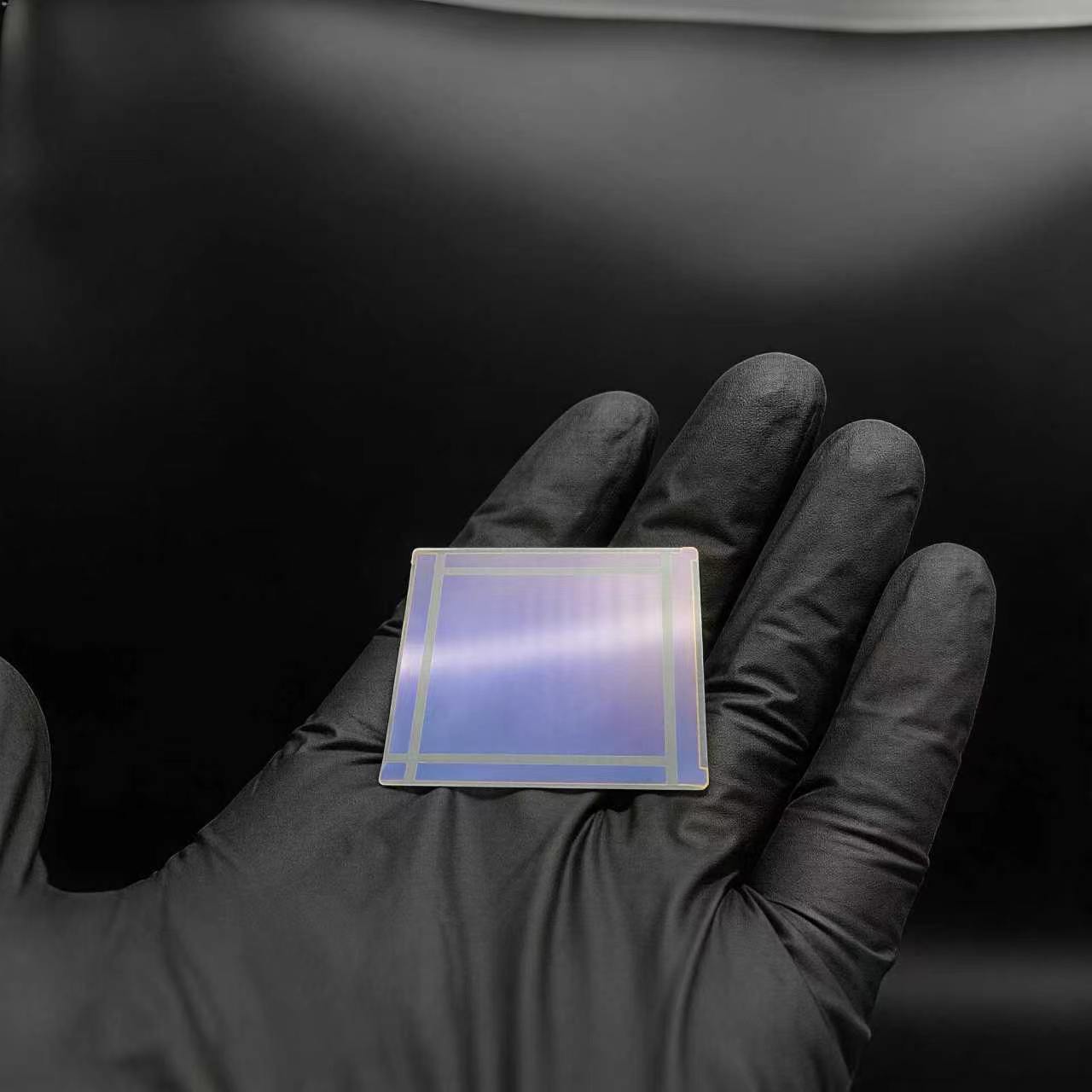
Palm-scale sample
Sample placed on a gloved hand to show handling scale and surface reflection.
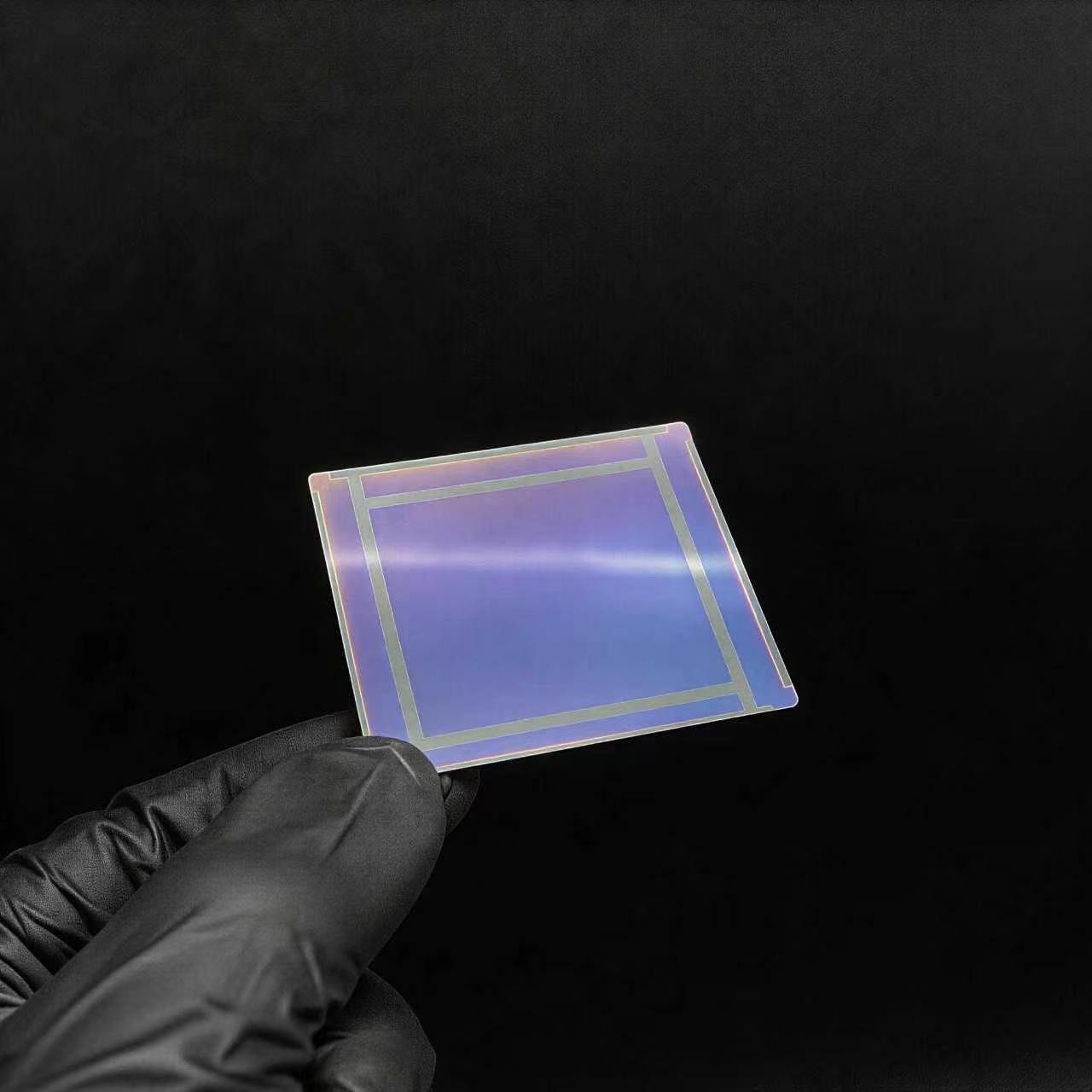
Tilted optical view
Tilted coupon view showing the coated optical response against a dark background.
Material Benchmark
The following values summarize Ce-UTG space-glass reference data for early material screening. Final spacecraft performance depends on coating design, adhesive selection, cell architecture, stack process, and mission qualification.
| Category | Key metric | Ce-UTG space glass |
|---|---|---|
| Lightweight | Density | 2.5–2.6 g/cm³ |
| Lightweight | Typical thickness | 50–100 μm |
| Reliability | Elongation | <0.1% |
| Reliability | Young’s modulus | ~72 GPa |
| Reliability | Poisson’s ratio | 0.20 |
| Optics | Initial transmittance | 90–92% |
| Optics | Radiation stability at AM0 ESH 1000 h, ΔT | <1.5% |
| Optics | Refractive index, nD | 1.5119 |
| Optics | UV cutoff wavelength at 50% transmittance | 350 nm |
| Thermal | Coefficient of thermal expansion, 20–150°C | 7.2 ppm/°C |
| Thermal | Transformation temperature | 579°C |
| Durability | AO erosion yield | <10−29 cm³/atom |
| Process | Manufacturing route | Sheet / batch |
Stack Positioning
Heliofold cover glass is intended for customers using a glass-cover protection route. Material selection should be evaluated together with coating, adhesive, solar-cell architecture, and mission-level stack requirements.
Designed as a transparent cover layer for solar-cell radiation protection, UV filtering, optical shielding, and surface durability.
Typically evaluated with a transparent silicone bonding route such as GPA-8811, subject to customer process validation and qualification.
Orbit, radiation dose, coating stack, thermal range, adhesive system, and cell type must be fixed before final stack-level qualification.
Tell us your orbit, cell type, required cover-glass thickness, coating target, optical transmission requirement, thermal range, and adhesive route. Heliofold can provide ultra-thin cover glass information for stack-level evaluation and qualification planning.