
The constraint is packaged volume
Rigid solar panels are effective once deployed, but they are bulky and difficult to stow. Every cubic inch inside a launch vehicle fairing has a cost. As AI-driven computation and other power-intensive infrastructure move into orbit, available electrical power becomes a defining system constraint.
A higher-efficiency cell helps, but efficiency alone does not solve the packaging problem. The complete power surface must also become lighter, thinner, and easier to deploy.
From rigid panel to roll-to-roll power
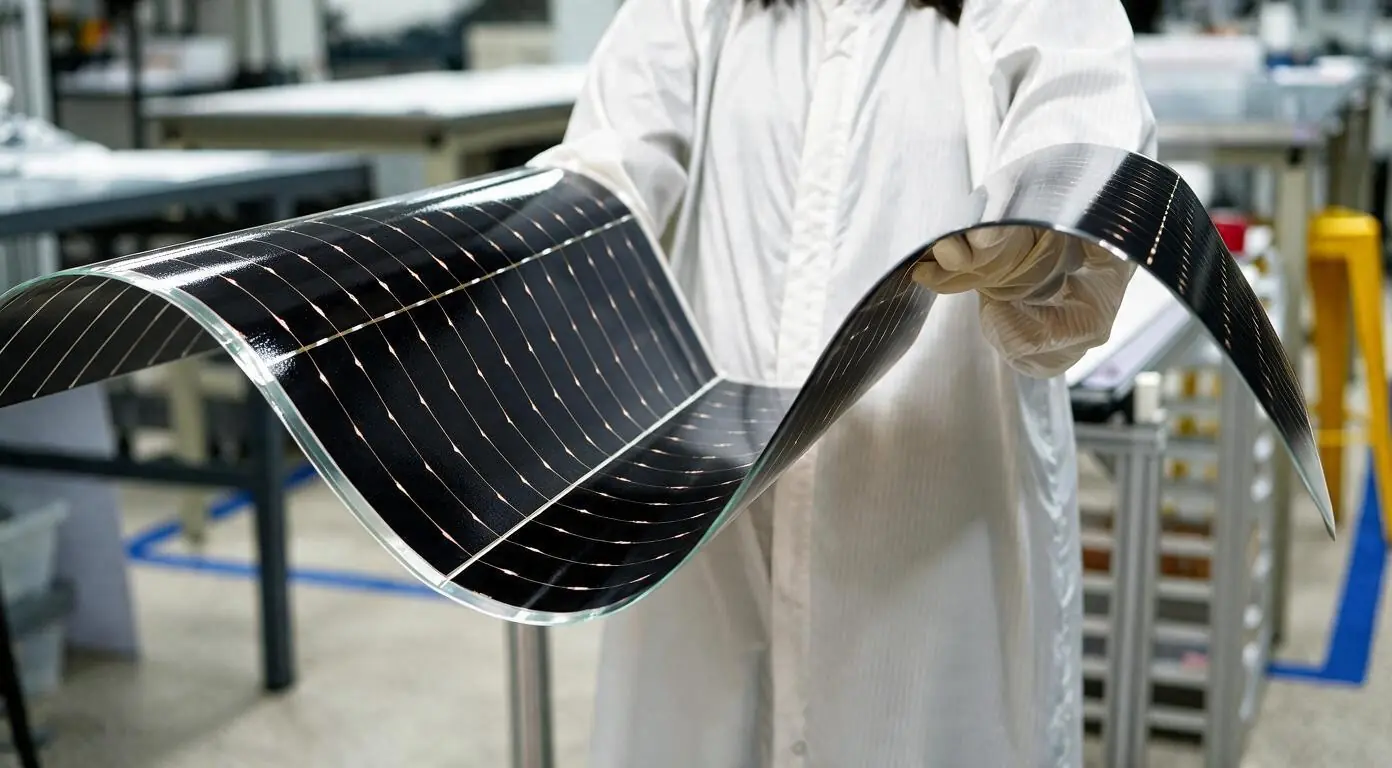
Heliofold US's Bifacia-enabled solar blanket concept is designed to roll like a scroll. During launch, the module occupies a compact volume. Once on orbit, it unrolls into a substantially larger power-generating surface.
The architecture combines an ultra-thin flexible substrate, high-efficiency HJT solar cells, and a transparent Bifacia™ substrate and protection layer. These elements are being developed as parts of one deployable material stack rather than as isolated components.
A materials problem and a deployment problem
A credible rollable array must address more than cell performance. Bend mechanics, interconnect strain relief, optical retention, protection-layer adhesion, thermal cycling, and deployment hardware all influence the final system. The value of flexibility therefore has to be demonstrated at stack and array level.
Where Heliofold US is heading
The planned solar blanket is intended for satellites, orbital AI compute platforms, and future space-based power infrastructure. Heliofold US is targeting availability beginning in 2027 while continuing HJT cell and Bifacia™ material evaluations with customers and integration partners.